Showing posts with label Bible. Show all posts

Monday, June 19, 2017

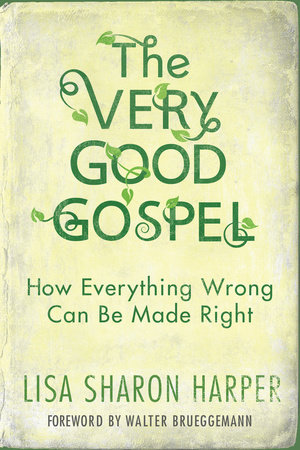
The Very Good Gospel -- book review

Let me begin this review by saying that when I chose this book I thought that is was written by a different Lisa Harper. The Lisa Harper that I assumed was the author of this book is a well known speaker at mostly Christian women’s events and an author as well. The Lisa Sharon Harper who is the actual author of this book is also an author and a speaker, but with a much different focus. I thought I was getting a book about God’s Word that may be somewhat light and an easy read. What I got instead, with The Very Good Gospel, was something much deeper and focused on justice through the light of God’s Word and works. With that said, this book was still an interesting read.

Lisa focuses on a few main things all wrapped up together; the brokenness of the world that we live in, what God intended for us and what He can do for us in this brokenness, and shalom. This isn’t a book of light, fluffy, feel good topics. Lisa addresses such issues as equality, race, brokenness, shame, hurt, hate, war, and more. Lisa addresses these topics from a very personal place with stories from her own life and real life examples. All of this helps to bring a tone of gentleness to what in reality are hard things. She also intertwines Scripture and deep theological studies of God’s Word that relate to whatever topic is being discussed.

We cannot deny that we live in a broken and hurting world. It is easy to see this, just read a newspaper, turn on the TV, look at social media, the brokenness is everywhere. The heart of The Very Good Gospel points us toward the fact that in the midst of all this junk, God wants to heal, restore, and be in relation. That right there is the gospel message; a God who wants to work in and through us to have shalom.

This book was not my typical read. I will say though that for the most part I got a lot out of it. There were parts where I had “ah-ha” moments. There were other parts that I just read through. There were parts where I thought, “Hmm, I’m not sure I agree with that.” An interesting part of this book, that adds to it, at the end of most chapters there are questions and activities for self reflection. In my opinion this book would be a great read for someone who wants to know more about social justice in the light of God’s Word. Although, many others could get a lot out of this book.
    

I received this book for free from Blogging for Books for this review.

Monday, November 10, 2014

Deborah & Jael

Since both Deborah and Jael are mighty warrior women of the Bible and their stories are part of the same larger story, might as well study them together. Their story begins something like this. The Israelites were ruled by a series of Judges for many years. The Israelites also kept repeating the same cycle of doing well with God and then “the Israelites once again did evil in the eyes of the Lord” (Judges 4:1, and many other places in Judges.) It was a vicious sin cycle that they were caught in. Deborah was ruling as judge of the land at one of those times when the people had turned away from God. Deborah herself was a righteous, Godly woman. The Israelites, because of their wickedness, had been oppressed by a king of Canaan for something like twenty years. They were especially afraid of the commander of the king’s army, Sisera.
So the Lord sold them into the hands of Jabin, a king of Canaan, who reigned in Hazor. The commander of his army was Sisera, who lived in Harosheth Haggoyim. Because he had nine hundred iron chariots and had cruelly oppressed the Israelites for twenty years, they cried to the Lord for help. Judges 4:2, 3
The Israelites had good reason to be afraid of Sisera, he was a bad dude.

Deborah knew that it was time to take on Sisera. To do this, she enlisted a man by the name of Barak. She gave him the message that God had given to her for what to do.
“The LORD, the God of Israel, commands you: ‘Go, take with you ten thousand men of Naphtali and Zebulun and lead the way to Mount Tabor. I will lure Sisera, the commander of Jabin’s army, with his chariots and his troops to the Kishon River and give him into your hands.’”  Judges 4:6, 7
Barak said that he would go, but only if Deborah would go with him. Now when I read this it seems a bit strange. Why would Barak need Deborah, a woman, to go with him into battle? It wasn’t common practice at that time for woman to fight in battles alongside the men. I read a few commentaries on this and they seemed to reference the fact that since at the time Deborah was the Judge and leader of the land, Barak would want her with him. Another commentary put it sort of in this way; Barak didn’t want to go where Deborah was not willing to go herself. It would be like when a friend dares you to do something, and you say, “Ok, I’ll do it if you do it with me.” Deborah agreed to go with Barak into battle. She warned him that it would cost him the honor of victory, instead that would go to a woman (Judges 4:9.)

During the battle, Sisera managed to escape by foot. He ran right into the tent of Jael. She welcomed him in.
Sisera, however, fled on foot to the tent of Jael, the wife of Heber the Kenite, because there were friendly relations between Jabin king of Hazor and the clan of Heber the Kenite. Jael went out to meet Sisera and said to him, “Come, my lord, come right in. Don’t be afraid.” So he entered her tent, and she put a covering over him. Judges 4:17, 18
Sisera was tired and thirsty from having been on the run. Jael took him in, gave him a place to lay down to rest, and a drink of milk. This would be when Jael steps into the role of a mighty warrior woman.
But Jael, Heber’s wife, picked up a tent peg and a hammer and went quietly to him while he lay fast asleep, exhausted. She drove the peg through his temple into the ground, and he died. Judges 4:21
Jael was a woman not to be messed with. I bet her husband didn’t want to get on her bad side after this incident. I can only imagine the amount of force it would take to put a peg through someone’s head. Because of what Jael did, the words of Deborah came to pass in that Barak wasn’t the one to get the credit for conquering Sisera.
Barak came in pursuit of Sisera, and Jael went out to meet him. “Come,” she said, “I will show you the man you’re looking for.” So he went with her, and there lay Sisera with the tent peg through his temple – dead. Judges 4:22


The death of Sisera was also a key in the Israelites becoming stronger over the Canaanites. Without Deborah and Jael this may not have happened. They were both honored in Judges 5 in the Song of Deborah. Both of these women were honored in their land for their heroic deeds and Godly character. 

Monday, October 20, 2014

Rahab

When Joshua, along with the Israelites was going to take the city of Jericho they had some help from an unlikely source. Her name was Rahab, and she was a prostitute. Not exactly the first type of person who comes to mind when you think of those God would use to accomplish His mission. When you look at the story, Rahab was the right person to play a part in the defeat of Jericho.

Two men were sent out from the Israelites to spy out the land.
So they went and entered the house of a prostitute names Rahab and stayed there.  Joshua 2:1b
When you think about it, it makes sense that the men would go to a prostitute’s house as a safe place to hide out. Since Rahab was a prostitute it wouldn’t be an odd thing if men, whom she didn’t know, were going into her house. The king of Jericho quickly found out that spies were in his land, and he knew they had gone to Rahab’s house. Rather than give these spies up, Rahab chose to protect them. She hid them on the rooftop until the coast was clear for their escape. Rahab risked her own safety to protect these men because she knew that the land was to be theirs.
Before the spies lay down for the night, she went up on the roof and said to them, “I know that the LORD has given this land to you and that a great fear of you has fallen on us, so that all who live in this country are melting in fear because of you. We have heard how the LORD dried up the water of the Red Sea for you when you came out of Egypt, and what you did to Sihon and Og, the two kings of the Amorites east of the Jordan, whom you completely destroyed.  Joshua 2:8-10
All the people of Jericho knew the reputation the Israelites had. The Israelites were conquering lands right and left, and they could be next. Rahab could have been faithful to her country, but she recognized the true God that was with the Israelites.
When we heard of it, our hearts melted and everyone’s courage failed because of you, for the LORD you God is God in heaven above and on earth below.  Joshua 2:11
Rahab knew that the Israelites would be successful in conquering Jericho. She made the choice to turn from her ways and acknowledge their God, the true God.

Rahab took a risk in protecting the Israelite spies in order to protect not only herself, but also her family for the time when the Israelites would defeat the city. The spies agreed to this protection.
“Our lives for your lives!” the men assured her. “If you don’t tell what we are doing, we will treat you kindly and faithfully when the LORD gives us the land.” Joshua 2:14
They devised a plan to signify where she and her family would be so they could protect her. A scarlet cord was to be tied in the window that the men used to escape from. All of Rahab’s family was to be gathered in her home for protection. The acts of Rahab literally saved her whole family.

The day came when Joshua led the Israelites to Jericho to take over the city. It must have taken faith for Rahab to believe that she and her family would be saved because of an oath she had made with the spies.
By faith the prostitute Rahab, because she welcomed the spies, was not killed with those who were disobedient.  Hebrews 11:31
Because Rahab’s home was in the city wall, they would have seen the army marching around the city day after day. The faith that Rahab had must have been tested. When the walls of the city came down, her faith paid off for her and her family.
Joshua said to the two men who had spied out the land, “Go into the prostitute’s house and bring her out and all who belong to her, in accordance with your oath to her.” So the young men who had done the spying went in and brought out Rahab, her father and mother and brothers and all who belonged to ber. They brought out her entire family and put them in a place outside the camp of Israel. Joshua 6:22, 23
Rahab and her family were saved, but at the same time they lost everything they had and their homes. Everyone else in the city was killed. They would have been left with nothing, but their lives.
But Joshua spared Rahab the prostitute, with her family and all who belonged to her, because she hid the men Joshua had sent as spies to Jericho – and she lives among the Israelites to this day.  Joshua 6:25

Rahab not only ended up living among the Israelites and serving their God, she married into the Israelites as well. Rahab married Salmon and became the mother of Boaz.
Salmon the father of Boaz, whose mother was Rahab, Boaz the father of Obed, whose    mother was Ruth, Obed the father of Jesse, and Jesse the father of King David.  Matthew 1:5, 6a
This is significant because it means Rahab is in the genealogy of Jesus. Rahab went from being a prostitute to being a significant person in Christian history. Rahab was remembered among the Jews for what she did. James says of her, “In the same way, was not even Rahab the prostitute considered righteous for what she did when she gave lodging to the spies and sent them off in a different direction?” (James 2:25.) Now that is a transformation and redemption story.


For the Lord your God is God in heaven above and on the earth below.  Joshua 2:11b

Tuesday, June 24, 2014

Moses' Mother, Sister, & Pharaoh's Daughter

Without the help of Moses’ Mother, Sister, and Pharaoh’s Daughter, Moses would have never survived. All three of these women played an important role in saving the life of a baby that would grow up to be a very important man to his people, and one that changed the course of their history. 

Moses was Hebrew, a Levite to be exact. Because of this fact, when he was born his life was in danger. At that time, the Israelites were slaves to the Egyptians. Pharaoh, the head of the Egyptians, didn’t like that the Israelites were outnumbering the Egyptians. His solution to this problem was to have all the male babies killed. Moses’ mother knew that her baby’s life was in danger because of what Pharaoh was doing. She hid her child as long as she could. Then she took a courageous step in the hopes that it would save his life.
But when she could hide him no longer, she got a papyrus basket for him and coated it with tar and pitch. Then she placed the child in it and put it among the reeds along the bank of the Nile.   Exodus 2:3
I can’t imagine the anguish that this woman would have gone through to do this. She didn’t know if her son would be rescued. She didn’t know if he would be found by an Egyptian and killed anyhow. She was a desperate woman who was willing to let go of her son in order to try to save him.

Moses’ sister stood watch over her brother while he was floating in the Nile. (Side note: later in Exodus Moses has a sister we learn is named Miriam. The Bible doesn’t state if this is the same sister or not.) When Moses is rescued it is his sister that speaks up to ensure that for a little while longer he is in his mother’s care. Without her being there, Moses’ mother may have never known what happened to him, and probably wouldn’t have seen him again.

It is Pharaoh’s daughter who is the final rescuer.
Then Pharaoh’s daughter went down to the Nile to bathe, and her attendants were walking along the river bank. She saw the basket among the reeds and sent her slave girl to get it. She opened it and saw the baby. He was crying, and she felt sorry for him. “This is one of the Hebrew babies,” she said.  Exodus 2:5,6
If she wouldn’t have been in the right place at the right time, and not had compassion, Moses would not have ended up in the place that he needed to be. Being taken in by Pharaoh’s daughter put him in the right position to free his people later in life.

Moses’ mother was given another short time to be with her son. She was allowed to nurse him and take care of him as work for Pharaoh’s daughter. Of course she couldn’t let her know that she was his mother. Because of this arrangement it meant that she would again have to let go of her son and give him up in order to save him.
When the child grew older, she took him to Pharaoh’s daughter and he became her son. She named him Moses, saying, “I drew him out of the water.”  Exodus 2:10  

Moses’ mother loved him so much that she was willing to give him up not once, but twice in order to save his life. Now that is truly a mother’s love. 

Thursday, May 22, 2014

Potiphar's Wife

Potiphar’s wife is one of those not so good women in the Bible. Technically we don’t know anything of her before we meet her as part of Joseph’s story. Was she always a man chasing woman? Was this her first offense? We simple don’t know.  There are some things that we can learn from her, like what not to do.

Joseph was a servant in Potiphar’s house who was in charge of all that he had. Joseph earned this position because the favor of God was upon him. He was a good, upright, and righteous man. In Genesis it also says that he was “well-built and handsome” (Gen. 39:6b.) After a while Potiphar’s wife took notice of Joseph, probably had something to do with that “well-built and handsome” factor. She wanted him for herself, so she propositioned him. Being the righteous, God honoring man that he was, Joseph refused her. This didn’t deter her. She continued to pursue him.
And though she spoke to Joseph day after day, he refused to go to bed with her or even be with her.  Genesis 39:10  
Joseph wanted nothing to do with Potiphar’s wife because she was just that, someone’s wife. That didn’t stop her. Oh no, she just turned up her wicked ways.
One day he went into the house to attend to his duties, and none of the household servants was inside. She caught him by his cloak and said, “Come to bed with me!” But he left his cloak in her hand and ran out of the house.  Genesis 39:11, 12
When Potiphar’s wife didn’t get what she wanted she twisted and turned the story in vengeance. Suddenly she used Joseph’s cloak to devise a story that it was him who tried to take advantage of her. She sullied his name by telling the other household servants and her husband this lie. Just because she was rejected she hurt an innocent man.

I’m sure we have all been in a place at one time or another when we haven’t gotten what we wanted. Do we take that out on others? Not thinking of the repercussions that our actions have on others. Potiphar’s wife only thought of herself and no one else. She obviously didn’t think of her husband and her commitment to him. She didn’t think of the disgrace that she was putting on an innocent man. She only wanted what she wanted! Her selfish desires cause Joseph to be put into prison. Thankfully, God’s hand continued to be on Joseph, and he prospered even while in prison. We don’t know what happened to Potiphar’s wife, but I can only imagine that if she continued in her selfish ways, she lived an unfulfilled and regretful life.  

Monday, May 12, 2014

Tamar

The story of Tamar is what soap operas are made of. This is one of those stories in the Bible, where you think, “That is in the Bible!” Tamar’s story doesn’t start off crazy. When we first meet her she is just the woman who became the wife of Judah’s oldest son, Er. Er wasn’t a good guy and God put him to death because of this. Now Tamar is a widow. Judah had another son, Onan. It was customary for the next brother to marry what would be his sister-in-law in order to produce an heir for his older brother. Onan didn’t want to produce a child for his brother cause he knew that it would not be considered his child. So, when Onan slept with Tamar he “spilled his semen on the ground to keep from producing offspring for his brother” (Gen. 38:9.) God wasn’t pleased by Onan’s actions and he was killed as well. Judah had one more son, Shelah, but he was too young still to take Tamar as his wife. Judah was also reluctant to give his third son to Tamar as a spouse, considering what happened to his other two sons.
Judah then said to his daughter-in-law Tamar, “Live as a widow in your father’s house until my son Shelah grows up.” For he thought, “He may die too, just like his brothers.” So Tamar went to live in her father’s house.   Genesis 38:11 
After a long time Tamar was still living as widow in her father’s house. She knew that Judah had not fulfilled his work and given his third son, Shelah, as a spouse for Tamar. Tamar then took matters into her own hands and devised a plan to get back at Judah.

When Tamar learned that Judah would be passing through the area around when she was living, she disguised herself so that Judah would not know who she was and set out to trick him. Her plan worked! Judah thought that she was a prostitute and propositioned her.
When Judah saw her, he thought she was a prostitute, for she had covered her face. Not realizing that she was his daughter-in-law, he went over to her by the roadside and said, “Come now, let me sleep with you.” “And what will you give me to sleep with you?” she asked. “I’ll send you a young goat from my flock,” he said. “Will you give me something as a pledge until you send it?” she asked. He said, “What pledge should I give you?” “Your seal and its cord, and the staff in your hand,” she answered. So he gave them to her and slept with her, and she became pregnant by him.  Gen. 38:15-18
Tamar and Judah then went their separate ways. She put her widow’s clothes back on and he returned to his home. He then sent his friend to deliver the goat that he had arranged as payment for sleeping with who he thought was a prostitute. When his friend got to the area where the “prostitute” had been there was no prostitute to be found. He asked the men that lived around there, they told him there hadn’t been a prostitute there. So, he returned to Judah and told him that he couldn’t find her. Judah didn’t want to be made a laughingstock so he didn’t pursue finding the woman to give her the goat and retrieve the items that he had left as collateral.

Around three months later Judah was told that Tamar was guilty of prostitution and that she was now pregnant because of it. Judah’s response was to have Tamar burned to death because of her actions. Tamar was one step ahead of him though because she still had the items that he had given to her.
As she was being brought out, she sent a message to he father-in-law. “I am pregnant by the man who owns these,” she said. And she added, “See it you recognize whose seal and cord and staff these are.”  Gen. 38:25
Judah recognized them alright. He declared that she was more righteous than he was because he had not fulfilled his word and given his son to her. Tamar’s life was spared and she later gave birth to twin boys, Perez and Zerah.

I have heard this story talked about a few times. It always seems like Tamar is made out to be the righteous one in the story and Judah is the bad guy. I don’t see it that way. When I read this story I see it in a differently. I think it is more of a story of “two wrongs don’t make a right.” Judah was guilty of not fulfilling his word to Tamar. Tamar was guilty of deceiving Judah and prostitution. They were both at fault in the situation. What is amazing though is that God can take two wrongs and make a right.
And we know that in all things God works for the good of those who love him.  Rom. 8:28a

Only God can take our mistakes and turn them into something good. We are still responsible for the wrong that we do, this doesn’t give us an out for our sin. God made good out the situation with Tamar and Judah. Their son, Perez, was a part of the genealogy of Jesus. That seems like good coming out of bad to me. 

Monday, April 28, 2014

Dinah

Dinah, the daughter of Leah and Jacob, was a victim. She was the victim of sexual abuse. One day she went out to visit the women who lived in the area and she was violated by Shechem, who was the son of Hamor the ruler of the area. Shechem was drawn to Dinah and tried to get his father to get her for his wife. Jacob knew what he had done and that it was dishonorable and not right. Jacob was not about to allow his daughter to be the wife of this man.

Now remember that Dinah had brothers, and half brothers, several brothers actually. These brothers weren’t happy about what had happened to their sister.
Now Jacob’s sons had come in from the fields as soon as they heard what had happened. They were filled with grief and fury, because Schechem had done a disgraceful thing in Israel by lying with Jacob’s daughter – a thing that should not be done.   Genesis 34:7
 Like good older brothers they wanted to protect Dinah. They also wanted to make Shechem pay for the dishonorable thing that he had done.
Because their sister Dinah had been defiled, Jacob’s sons replied deceitfully as they spoke to Schechem and his father Hamor.  Genesis 34:13
The told Schechem and Hamor that for them to allow Dinah to marry into their family and also intermarry with their people all the males would have to be circumcised, just as they were. Hamor and Schechem agreed with this and thought it sounded good. Little did they know that Dinah’s brothers had a different plan in mind. Three days later, while the men were still recovering from their little operation, Simeon and Levi struck. They killed every male, then looted the city, took all their livestock, women and children, and wealth (Gen. 34:25-29.)

Dinah’s brothers may have gone a bit far in protecting their little sister. Jacob was not happy about what they had done. He knew that what they did could bring trouble upon them. The brothers justified their actions though by saying, “Should he have treated our sister like a prostitute” (Gen. 34:31.)   


Killing someone else in the name of vengeance is not ok. Did the brothers take their protecting too far, yes. 
The one thing that we can take from this is that the intent to protect their sister was right. How they went about it was not. I remember when I first started dating Gerrit, my brother, being a good and protective older brother, said that if Gerrit tried to do anything to me he would punch him in his throat. Thankfully it wasn’t ever necessary for him to take that action. He was just looking out for his little sister though, and I appreciated that. Be thankful for your protective older brothers, Dinah probably was.   

Saturday, March 15, 2014

Rachel & Leah

Leah and Rachel were the original sister wives. They were the wives of Jacob. One was loved and wanted as a wife; the other became a wife through the deception. Jacob was honorable and fulfilled his role as husband to both, but he truly only loved one. Rachel was the woman that Jacob had asked for and worked seven year to have as a wife.
Jacob was in love with Rachel and said, “I’ll work for you seven years in return for your younger daughter Rachel.” Laban said, “It’s better that I give her to you than to some other man. Stay here with me.” So Jacob served seven years to get Rachel, but they seemed like only a few days to him because of his live for her.  Genesis 29:18-20
The problem with Jacob having Rachel for a wife was that she was the younger daughter. It was customary back then for the oldest to marry first. This is why Laban deceived Jacob and gave him Leah as his wife instead.

Now, the Bible says that Leah “had weak eyes” (Gen. 29:17.) When I read this my first thought is that she had some sort of eye condition, or was partially blind, and therefore less desirable to have as a wife. That is how I would interpret it. After doing some research though, I found some other opinions of what “weak eyes” meant. A lot of Jewish commentaries said that “weak eyes” is referring to her lamenting. Her eyes were red and swollen from much crying. They say that she was lamenting at the possibility of having to marry Esau, the older brother of Jacob, which she did not want to do. Leah is said to be a righteous woman. Jacob did not love Leah as he did Rachel though.

Rachel on the other hand “was lovely in form, and beautiful” (Gen. 29:17.) Rachel was the sister that Jacob intended to have as a wife. She was pleasing to him. So much so that Jacob was willing to work for Laban for another seven years in order to have her as his wife. After all, “he loved Rachel more than Leah” (Gen. 29:30.)

God saw Leah and knew that she was not loved, so He allowed her to have children (Gen. 29:31.) Leah gave birth to a son. Having a child and particularly a son was important. Leah was blessed by the birth of a son.
“It is because the LORD has seen my misery. Surely my husband will love me now.” Genesis 29:32
Leah had four sons before she was no longer able to have children, or at least it seemed. One of which was Judah. This is significant because Judah is in the lineage of Jesus (Matt. 1:3.) Leah played a part in the genealogy of Jesus, and that is a very blessed thing.

The fact that Leah had given Jacob four sons and Rachel was not able to have any children made Rachel jealous. Rachel was real dramatic about it too.
            So she said to Jacob, “Give me children, or I’ll die.” Genesis 30:1b
Jacob knew that it wasn’t his fault, even though she tried to blame him. Rachel took matters into her own hands and gave her servant to Jacob to bear children for her. Rachel’s servant bore two sons. Her response to the second son was, “I have had a great struggle with my sister, and I have won” (Gen. 30:7.) Then Leah seeing that she couldn’t have more children gave her servant to Jacob, and her servant bore him a son.

At this point I have started feeling sorry for Jacob. He is the man in the middle of two sisters at war. Then the story gets a little crazier. They use Jacob as a bartering tool for mandrakes (which are orange to red berries that resemble small tomatoes.)
During wheat harvest, Reuben went out into the fields and found some mandrake plants, which he brought to his mother Leah. Rachel said to Leah, “Please give me some of your son’s mandrakes.” But she said to her, “Wasn’t it enough that you took away my husband? Will you take my son’s mandrakes too?” “Very well,” Rachel said, “he can sleep with you tonight in return for your son’s mandrakes.” So when Jacob came in from the fields that evening, Leah went out to meet him. “You must sleep with me,” she said. “I have hired you with my son’s mandrakes.” So he slept with her that night. Genesis 30:14-16 
Leah then gave Jacob two more sons and a daughter. 

After this, finally Rachel had a child, Joseph. As you may remember Joseph became a pretty important guy and the favorite son of his father Jacob.

Rachel later made a big mistake though. When Jacob decided that it was time to leave Laban, his father-in-law, and return to his homeland, Rachel stole her father’s household gods. Laban found out they were stolen and wasn’t happy about it. God warned him to not harm Jacob or his family though. Jacob and no one else knew what Rachel had done. In fact Jacob said that if anyone in his family took the gods that they should die. Rachel was clever about her deception though.
So Laban went into Jacob’s tent and into Leah’s tent and into the tent of the two maid servants, but he found nothing. After he came out of Leah’s tent, he entered Rachel’s tent. Now Rachel had taken the household gods and put them inside her camel’s saddle and was sitting on them. Laban searched through everything in the tent but found nothing. Rachel said to her father, “Don’t be angry, my lord, that I cannot stand up in your presence; I’m having my period.” So he searched but could not find the household gods.  Genesis 31:33-35
The Bible doesn’t mention if the gods that Rachel took were ever found. But, why did Rachel take them? They weren’t the God that Jacob served. Was she holding on to her old traditions, her old family ways? It seems that way. Rachel was deceptive in what she did though. This doesn’t shed a light of righteousness on her.


There is a contrast between Leah and Rachel. Rachel may have been outwardly beautiful, but she doesn’t seem to be a woman filled with righteousness. Leah on the other hand may not have been as beautiful, but she was righteous. So often the greater emphasis and importance is put on the outwardly beauty. God on the other hand cares more for what is on the inside. Righteous living will always outweigh beauty any day. There is nothing wrong with being beautiful, but always pursue righteousness! Be a Leah, not a Rachel.

Friday, February 28, 2014

Rebekah

Rebekah was the chosen bride of Isaac. Abraham sent his servant to his homeland to find a wife for his son, Isaac. Abraham didn’t want his son to marry a Canaanite woman, and since he was quite elderly he couldn’t travel to find a wife for a son on his own. Abraham made the servant promise that he would follow through with the guidelines that were set before him. Abraham was sure of his plan and where to find a wife for Isaac. He told his servant, “he will send his (God’s) angel before you so that you can get a wife for my son from there” (Genesis 24:7b.) Abraham knew that is was just more than his plan though, it was God’s plan.

When the servant arrived at his destination, he prayed. He knew that to pick the right girl to be the bride of Isaac he would need God’s guidance. Abraham had told him that an angel would go before him.
Then he prayed. “O Lord, God of my master Abraham, give me success today, and show kindness to my master Abraham. See, I am standing beside this spring, and the daughters of the townspeople are coming out to draw water. May it be that when I say to a girl, ‘Please let down your jar that I may have a drink,’ and she says, ‘Drink, and I’ll water your camels too’- let her be the one you have chosen for your servant Isaac. By this I will know that you have shown kindness to my master.” Before he had finished praying, Rebekah came out with her jar on her shoulder. Genesis 24:12-15a
The servant sent out a plea with directions to God, so that he could clearly know who the right girl was, if she was “the one.” Now when I was in Bible college, or as it is also known Bridal College, it wasn’t uncommon to hear someone use the phrase, “the one” in regard to their own life. In fact you heard people say it so often that we would joke about it. Now, off that bunny trail and back to the main point.

As it states, “Before he had finished praying,” Rebekah appeared and fulfilled the requirements the servant was looking for to know if she was “the one.” Wow! Don’t we all want to have prayers answered like that! Who wouldn’t want God to answer their prayer before they were even finished praying. Abraham had said that God would send His angel before him to prepare the way. The servant’s prayer was already in line with what God had planned. When our prayers and God’s will align, prayers can be answered with haste. Not that it always happens this way, but it can.

After the servant recounted the story or how everything took place to Rebekah’s family, they agreed that she could leave them to be the wife of Isaac.
Laban and Bethuel answered, “This is from the LORD; we can say nothing to you one way or the other. Here is Rebekah; take her and go, and let her become the wife of your master’s son, as the LORD has directed.” Genesis 24:50,51
The servant took Rebekah back to Isaac. Isaac and Rebekah were married and he loved her. The leading of God brought them together.

Rebekah was barren and Isaac prayed to God that they would have a child. God answered his prayer and Rebekah gave birth to twin boys, Jacob and Esau. While Rebekah was pregnant God told her that two nations were in her womb and that the older would serve the younger. This came to pass when the boys were grown and Rebekah had a part in the deception.

Rebekah loved Jacob, he was a mama’s boy. Isaac though, loved Esau. Jacob and Esau were two very different men. Esau was a hunter and a man of the wild, he was also a harry man. Jacob was quiet and hung out around home. Esau was the older, and therefore was given a birthright as the oldest son. One day, Jacob schemed Esau out of his birthright. When Isaac was about to die the deception continued. Jacob, with the help of his mother, tricked his father into blessing him instead of Esau. In fact, the whole plan of how to trick Isaac was Rebekah’s idea. Esau was furious at what his brother had done and wanted to kill him. Rebekah then devised a plan for Jacob to escape his brother’s wrath.


How did Rebekah go from the chosen bride for Isaac to a woman who helped her son deceive his father? The Bible doesn’t give much insight between these two things, so I guess we will just have to wonder about that. The last that is mentioned of Rebekah is where she is buried.  

Thursday, February 6, 2014

Lot's Wife & Daughters

Let’s begin by admitting that I have never really gotten why Lot’s wife turned into a pillar of salt. I know the “why,” as in why it happened. She disobeyed God when He told them to flee Sodom and Gomorra and to not look back. So, what did she do, she looks back, thus being turned into a pillar of salt. The part I have never gotten is, why salt? Why didn’t God just strike her dead or bring some other sort of consequence on her. Being turned into a pillar of salt just seems weird to me. Maybe to figure this one out I should go back to the “what happened.”

Lot and his family were living in the city of Sodom. Now, Sodom was a very wicked and sinful city. It was so corrupt that God had said He was going to destroy the city. Lot was not like the other men in the city, so God chose to spare him and his family. Lot tried to warn the men who were to be married to his daughters of what was to come, but they didn’t believe him and were destroyed with everyone else in the city. God had sent angels to deliver this message to Lot and to get them out of the city.
With the coming of dawn, the angels urged Lot, saying, “Hurry! Take your wife and your two daughters who are here, or you will be swept away when the city is punished.” When he hesitated, the men grasped his hand and the hands of his wife and of his two daughters and led them safely out of the city, for the Lord was merciful to them. As soon as they had brought them out, one of them said, “Flee for your lives! Don’t look back, and don’t stop anywhere in the plain! Flee to the mountains of you will be swept away!” Genesis 19:15-17
Lot and his family didn’t want to go to the mountains though because they thought they couldn’t survive there, so they made a deal to go to a different city instead. The angel said to go to this town quickly because he couldn’t do anything until they reached it.

They were clearly told to flee and not look back. God was sparing their lives and saving them from total destruction. Why would they want to look back at what was a terrible place? For some reason we tend to do the same thing, looking back at the bad places that God has rescued us from. Maybe it is the sin nature in us, or the fact that we tend to want to hold on to things, or not wanting to change even when we know we need to, whatever the reason is, we do it, we look back. We don’t have to do it though; we have a choice to look back or not.  

Lot’s wife did it too, she looked back. God had safely brought them to a place of safety and told them not to look back. She did it though and suffered the consequence of being entrapped in the same destruction that was happening to the place she had fled from. As God was raining down burning sulfur on the cities, Lot’s wife looked back, saw what was happening, and was consumed in the same fate.    

To answer the “Why salt?” question I had to do some research. From what I found, it often associated salt with brimstone. It says that the cities were destroyed by burning brimstone. Also, in that area it is common to see salt mounds that sort of look like stalagmites. So, if it was raining brimstone and if she was consumed by this then she could turn to a pillar of salt. Now I will admit that I still don’t fully get this. I may need someone way more intelligent to explain it to me, or it will be a question to ask when I get to heaven.


Well, Lot’s daughters were not much better than their mom. After they had fled to Zoar, and Lot’s wife was turned to a pillar of salt, they moved on to living in the mountains. The daughters, felling isolated and hopeless about not being able to produce heirs to continue on the family line, devised a plan to get their father drunk and then sleep with him. Poor Lot, like he hadn’t been through enough already, now he is being raped by his daughters. Both daughters became pregnant and gave birth to sons. Their son’s were the fathers of the Moabites and Ammonites, two groups of people who would later cause problems. Like their mom, Lot’s daughters made some very bad decisions. They disobeyed God and it came with consequences.  

Monday, January 27, 2014

Hagar

Hagar was a woman who was put into a difficult situation that she did not choose. In the midst of her difficulties God saw her though and protected her, guided her, and took care of her.

Hagar was the Egyptian maidservant of Sarai. When Sarai could not bare children of her own, she came up with the brilliant (sarcasm) plan to give Hagar to Abram as a wife so that she could bare him a son.
So she said to Abram, “The Lord has kept me from having children. Go, sleep with my maidservant; perhaps I can build a family through her.” Genesis 16:2
When Hagar knew that she was pregnant she began to despise Sarai (Gen. 16:4.) Of course this didn’t make Sarai very happy and she began to mistreat Hagar. Hagar did what most people would do in that sort of situation, she ran away from her problems.

An angel of the Lord found Hagar in the desert. She tried to run away, but God still saw her. He knew exactly where she was, what her hearts motive was, and what her situation was.
And he said to her, “Hagar, servant of Sarai, where have you come from, and where are you going?” “I’m running away from my mistress Sarai,” she answered. Genesis 16:8  
The angel instructed her to submit to Sarai and go back. Hagar was a servant, and when she became pregnant she got a little too big for her britches. As a servant, her place was to submit. This makes me think about times when we have to submit to someone that we may not want to. It may be a boss, a parent, a spouse, a church leader, whoever, sometimes we get a bit too big for our britches when really it is our place to serve in submission.

The angel told Hagar that her descendant would be increased in a way that they would be too many too count. This blessing came with the instruction that she was to submit though. Hagar was obedient and did as she was instructed to do and returned.

God saw Hagar. She recognized this and this is what she did:
She gave this name to the Lord who spoke to her: “You are the God who sees me,” for she said, “I have now seen the One who sees me.” Genesis 16:13
God saw her and He sees us too. He may not appear to us in the same way that He appeared to Hagar, but that doesn’t mean that He doesn’t see us.

Hagar had her son and gave him the name that the Lord had told her to give him, Ishmael. When Ishmael was older and after Sarah had given birth to Isaac, there was discord between Sarah and Hagar once again. Ishmael was mocking Isaac, which didn’t make momma Sarah very happy. She insisted that Hagar and Ishmael be sent away. Abraham didn’t want to do this to his son and Hagar, but God assured him that they would be taken care of.
Early the next morning Abraham took some food and a skin of water and gave them to Hagar. He set them on her shoulders and then sent her off with the boy. She went on her way and wandered in the desert of Beersheba. Genesis 21:14

The provision ran out though and Hagar thought that would be the end of them. She began to weep for her son. Once again God saw her. He sent an angel to reassure her that they would survive. God opened her eyes and there she saw a spring of water. He provided for them in just the right time. Remember, He is the God Who Sees!

The Names of God - Book Review

Knowing God by Name, a Girlfriends in GodFaith Adventure is an eight week devotional with daily readings that include some stories or personal antidotes and a section of Scripture that includes that days focus on a certain name of God. Sharon Jaynes, Gwen Smith, and Mary Southerland, who together are Girlfriends in God, have teamed up to put together this devotional. Each one separately writes the different days of the devotional. They are known for their online devotional and each is a speaker and writer in their own right.

Knowing the names of God and what they mean is a great way to know more of the character of God and who He is. After all, knowing more of God’s character helps us to grow closer to Him. Focusing on one name a day is great idea for a devotional. There are forty names of God that are studied in this devotional. Each one is discussed in a simple way that isn’t too deep or overwhelmingly theological. The writing makes it very easy to read and make applicable to your own life.

Each daily reading, if you choose to read the book in a devotional fashion, is usually only 3-5 pages and a quick read. Each day includes a portion of Scripture and a reflective prayer. There is also a day for reflection that includes review questions and personal reflection. This book could be used as a personal devotional or as a group Bible study. Personally I think that I would have gotten more out of it if I were using it in group setting and discussing with others the material. It was good to read just on my own too though.

Having previously read a book by Sharon Jaynes, I knew that I enjoyed her writing, and this was one thing that drew me to this book. Also, reading an excerpt from the book made it seem like it would be interesting. I did enjoy reading this book. At times the personal stories and antidotes seemed to almost distract from what the focus of the book is, the names of God. Although, the names of God were talked about and explained, I felt that more focus could have been put on them and the portions of Scripture that they were taken from. This book is of course directed at women, thus the "Girlfriends" part. It would be a great read for a women's group, an individual woman, or someone who just wants to know more about who God is.

I received this book for free from Blogging for Books for this review.

Friday, January 24, 2014

Sarai - Sarah

Now here is a woman in the Bible that I feel as though I have a connection to, at least in name. When I begin to think about Sarah (the one from the Bible, not myself), immediately I think of the woman who gave birth to a child at a really old age because God had said it would happen and therefore she was part of a miracle. Immediately this makes me think of her as this idealistic person whom God chose to use in this amazing story. Sort of the very Sunday School idea of Sarah. Then I dig a little deeper into who she was and I begin to see her in a different light. Yes, God gave her and Abraham a son in their old age, which was a miracle that only He could make happen, she was a woman of God, but she had faults too. Sarah was a liar, she doubted God, she tried to make things happen her own way, she was jealous, she scorned her servant, or you could say she was a normal person with faults. And yet, in spite of all these things, God still chose to use her and bless her.

When we first see Sarai in the Bible (Gen. 12:4) it is when God tells Abram to leave his home land and move. Today it isn’t uncommon for people to move away from their homeland, but back then it didn’t happen very often. Moving away from the homeland would have been a big deal. They followed God’s leading though and did it. Soon after this we see the first promise that God gives Abram about his descendants. Remember, they didn’t have any children yet though.
            The Lord appeared to Abram and said, “To your offspring I will give this land.” Genesis 12:7a

Then, soon after this, we see them both caught in a lie. Abram, trying to protect himself and Sarai, told her to say that she was his sister. Abram was afraid that because of her beauty Pharaoh would want her for himself and have Abram killed in order for that to happen. Sarai must have been a very beautiful woman indeed for Abram to be worried about this. She went along with the plan though and they lied. Sure enough Pharaoh tried to take her as his wife. The Lord brought a disease on Pharaoh and his household for this, so he knew something was not as it seemed. Abram and Sarai were then sent on their way out of Egypt. Abram assumed that Sarai’s beauty could get him killed. We see though that even when Pharaoh found out that Sarai was really Abram’s wife and not sister, he didn’t kill them, he only ordered them to leave. So, instead of just trusting God that He would protect them, they took matters into their own hands and lied.

After this we see several times where God again tells Abram that he will have an heir (Gen. 13:15,16; 15:3-5; 15:18). It says that Abram believed the Lord. I’m sure as the years went on and Abram and Sarai grew older this promise was harder and harder to hold on to and believe. They both knew that they were well past the normal childbearing years. Here Sarai goes taking matters into her own hands and trying to make that promise happen in her own way and her own timing. Sarai decides that she will give her servant Hagar to Abram in order to produce an heir.
The Lord has kept me from having children. Go, sleep with my maidservant; perhaps I can build a family through her.” Genesis 16:2
I’m not sure when this would have ever sounded like a good idea to me. To me all this seems to do is ask for drama. In those days this wouldn’t have been uncommon though if a wife was barren. There was great importance put on having a child to be an heir to the family. To be barren was considered a shameful thing. God had promised an heir, a son specifically, to Abram and Sarai though, and this isn’t how He meant for it to happen.

Hagar, Sarai’s servant, becomes pregnant with Abram’s child. When Hagar knew she was pregnant she began to despise Sarai (Gen. 16:4b.) So, Sarai, of course not happy with this, goes to Abram about it. She tries to blame him for Hagar despising her.
Then Sarai said to Abram, “You are responsible for the wrong I am suffering. I put my   servant into your arms, and now that she knows she is pregnant, she despises me. May the Lord judge between you and me.” Genesis 16:5
Abram turned it back on Sarai though and told her to do with Hagar as she wished. Instead of Sarai accepting the consequences for what she had caused and dealing with Hagar in a Godly way, she chose instead to mistreat her. This caused Hagar to flee. Through God’s leading Hagar returned though and bore Abram a son, Ishmael.

Now, my favorite part of Sarai’s life story, the name change. God appears to Abram and establishes a covenant with him. Again God promises to make him the father of many nations and changes his name from Abram to Abraham (Gen. 17:5.) Then God changes Sarai’s name to Sarah and again told Abraham that he would bless her and give her a son.
God also said to Abraham, “As for Sarai your wife, you are no longer to call her Sarai; her name will be Sarah. I will bless her and will surely give you a son by her. I will bless her so that she will be the mother of nations; kings of peoples will come from her." Genesis 17:15,16

A couple months ago in my Sunday School class we were talking about covenants and this story came up. It was there that I learned the significance in the change of names for Abraham and Sarah. In those times when a person would make a covenant with someone else they would take part of that person’s name and put it in their name. This would show to everyone else who they were in covenant with. So, by God changing their names it showed that they were in covenant with Him. Abram to Abraham, that was an AH inserted into his name. The AH stood for Yahweh (the name that they often used for God.) Sarai to Sarah, the AI is dropped and AH is added. Now, everyone who knew Abraham and Sarah would know that they were in a covenant with Yahweh. Wow! I can’t think of a better way to have a name change.

Despite the mistakes and sins that Sarah had already committed, God still chose to bless her and use her for His greater purpose. Not only use her, but use her in a miraculous way. And not only was He going to bless and use her, He chose to change her name in such a way that would show others that she was in a covenant with Him. What an act of grace from a God who always has a plan and a purpose.

But then, after the name change Sarah returns to her lying ways. Ugh, she just doesn’t learn! Three mysterious men visit Abraham and they again repeat the promise that God had given Abraham and Sarah that they would have a son. This time it came with a time frame of one year from then. Now Abraham and Sarah were really old and well beyond the childbearing age at this time. Sarah overheard what these men told Abraham, because she was listening at the door to the tent. This is Sarah’s resonse:
So Sarah laughed to herself as she thought, “After I am worn out and my master is old, will I now have this pleasure?” Genesis 18:12
Since God is all knowing, Sarah’s moment of laughter wasn’t overlooked. The Lord asked Abraham why she laughed at what was said. Then He reminds them that He can do anything.
“Is anything too hard for the Lord? I will return to you at the appointed time next year and Sarah will have a son.” Genesis 18:14

Here is something that we all need to remember, “Is anything too hard for the Lord?” What a great question to ask yourself when faced with a trial, a hard decision, or the biggest mountain you have ever seen. The answer is always NO!

Sarah was afraid though, and responded out of this fear. She said she didn’t laugh. Of course God knew she did. I love His response to her lie. “Yes, you did laugh” (Gen. 18:15b.) He just calls her out on it. Now days we would call this a “white lie” or a “fib,” it doesn’t seem like a big deal, but a lie is a lie and it is a big deal when God gives us the commandment, “Thou shalt not lie.”

Later we see Sarah and Abraham once again dong the sister brother thing. You would think that they would have remembered what happened the last time they tried that, but no. Like many of us they too repeated the same mistake over. This time the victim was King Abimelech. God protected him and revealed to him the truth of the matter. In the end it all turned out ok and God was glorified. No matter what the situation, God can be glorified. Even when we don’t see how that would be possible. When reading this part of the story, glorifying God is not the first thing that comes to my mind, but in the end that is what happens.


Finally, we see the promise of God to Abraham and Sarah that they will have a son come to fruition. 
            Now the Lord was gracious to Sarah as he said, and the Lord did for Sarah what he had promised.               Sarah became pregnant and bore a son to Abraham in his old age, at the very time God had                         promised him. Genesis 21:1,2
Their precious son, Isaac, was finally born to them. Why? Because God was gracious and fulfilled His promise to them, and in His timing. Sarah rejoiced in the birth of her son.
Sarah said, “God has brought me laughter, and everyone who hears about this will laugh with me.” And she added, “Who would have said to Abraham that Sarah would nurse children? Yet I have borne him a son in his old age.” Genesis 21:6,7

As Isaac grew, Sarah once again resented Hagar and her son. Sarah didn’t want Hagar’s son to receive the family inheritance that she thought should be Isaac’s. An inheritance was a huge deal in those days. It still is today, but back then the first born son would most likely be the one to receive everything or the best of the father’s possession. A family would pass on land and wealth from generation to generation. Sadly that isn’t as common in the world we live in today. Back then it was a honor to be able to pass down to your children the things that you had received from those before you or that you had worked for. They wanted to be able to leave an inheritance for their children. We need more of this today. Instead of just thinking of what we can get for ourselves, we need to look beyond that and think of what we can leave for the generations after us.
Anyhow, back to the story. Sarah decided that she doesn’t was Ishmael to get what she thought should be Isaac’s. So, she has them sent away. Now, technically Ishmael was Abraham’s first born son. He should receive an inheritance. God took care of Hagar and Ishmael though. Abraham was worried about sending Hagar and Ishmael away, but God told him that it would be ok. God saw the bigger picture that Abraham could not see.

The last we hear of Sarah is her death. She lived to be 127. Abraham mourned the death of Sarah and made sure that she received a proper burial. Sarah was a woman, though she had flaws, who served a gracious God. She was far from perfect, but God used her to show future generations that He is capable of anything.  
Monday, January 6, 2014

Noah's Wife & 3 Daughter-in-Laws

These four women don’t have names that we know. Nowhere in the Bible are their names mentioned, but there are some things that we can assume from what we know about Noah and the story of the flood. First, Noah was a righteous man and God chose to save him when all the rest of humanity was destroyed in the flood. Second, Noah was obedient to God. Now let’s apply these things to the Noah’s wife and daughter-in-laws.

If Noah was a righteous man and chosen by God to be the builder of the ark, then his wife was also likely a righteous woman. When God saved Lot and his family, he didn’t save Lot’s wife because she was disobedient to the instructions He had given them. So, if Noah’s wife wasn’t a righteous woman why would God save her? After all, He was in the process of destroying all the earth because of the wickedness of the people.


Noah’s wife and daughter-in-laws must have been obedient. They got on the ark after all. This must not have been as easy thing to do. They were being asked to get into a huge boat with a bunch of animals and only their immediate family because God was going to bring a flood (which they had never experienced before) and destroy everything else. Talk about having to leave your normal life and everything you know and are use to behind. Not to mention the fact that everyone else, and I mean everyone else, was probably ridiculing them and thinking that they were crazy for what they were doing. Noah trusted God though and obeyed His every instruction. There isn’t any implication in Scripture that the women tried to argue any of this. They may have, but we know that they got on the ark and ultimately were obedient. Because of their obedience they were saved from destruction.

Sunday, January 5, 2014

One Year with the Women of the Bible

Each year I try to pick a focus for my Bible reading. Last year I focused on the book of Proverbs. I read a chapter a day for 12 months. I love the book of Proverbs, so this was pretty easy to do. It is a new year though, so I need a new focus. After thinking about it for a bit I decided to study the women of the Bible. To help me stay focused and on track with this I decided to write about each person I study. With some urging from my hubby, follow his blog here, I am going to post my journey through the women of the Bible. I begin with Eve.

Eve

Eve, she is also known as; the first woman ever, the mother of all humanity, and the one who brought sin into everyday life.

Eve was the second person to be created in the image of God (Gen. 1:26.) What does that mean to be made in the image of God? Obviously it isn’t a physical thing since we can’t see God and don’t even know if He has a body like we do. No, it is spiritual, characteristic, and the deepest part of who we are meant to be. We, being made in the image of God, are able to have a personal relationship with God because we too are relational as He is. Nothing else on earth, plants, animals, atoms, or cells, can be in relation to God as we can. This is what we were created for!

Eve was created for a purpose, on purpose. We first see that she and Adam were given the job of ruling over the fish, the birds, and the animals. They were also given all the vegetation and animals as food (Gen. 1:28-30.) They were essentially the caretakers of the Garden of Eden, this wonderful paradise that God had created. He entrusted both Adam and Eve with this purpose.

Secondly, she was made to be a help mate for Adam (Gen. 2:18, 20.) She was meant to be the one to work alongside Adam in caring for the Garden of Eden. She and Adam were one (Gen. 2:24b.) Ever wonder why God didn’t just create Eve from the dust of the earth and His breath as He did Adam? If Eve was created in that way, then she would not physically by a part of Adam, and God meant for them to have the unity of being one from the very beginning.
The man said, “This is now bone of my bones and flesh of my flesh; she shall be called ‘woman,’ for she was taken out of man.” Genesis 2:23
This oneness was the first covenant between man and woman. This is still where we have our basis for the covenant that we take in our marriage vows today. From the very first two people, we see that God established a clear picture of what marriage is suppose to be, even for us today.
For this reason a man will leave his father and mother be united to his wife, and they will become one flesh. Genesis 2:24
This verse itself is so future minded for where it is placed in the story of Adam and Eve. Think about it, aside from the heavenly Father, neither Adam nor Eve had parents. For them there wasn’t any leaving their parents to join together to form a new family unit. Clearly this verse was meant as an establishment for a basis for marriage for future generations. 

And then Eve makes the biggest mistake of her life, she listens to a serpent. Eve was the first person ever to disobey God and thus bring the sinful nature to mankind. Wow, the guilt that she must have felt. There was one thing, just one thing, that she and Adam were not to do, and she did it. She fell into the trap of temptation that was set before her and led her husband down with her. Paul later refers to this deception in 1 Corinthians, “But I am afraid that just as Eve was deceived by the serpent’s cunning, your minds may somehow be led astray from your sincere and pure devotion to Christ” (1 Cor 11:3.) Pretty sure that wasn't what Eve wanted to be remembered for. Now, Adam was guilty of being tempted and giving in to that temptation. He is responsible for his own actions though, and could have said “no” to eating the fruit. So, Eve wasn’t the only one who had to bear the guilt and shame of what was done. Of course there is the serpent too, and the part that he played. He too is responsible for what he did. God didn’t buy it when any of them tried to play the blame game either. Nope, He knows all and thus that game just doesn’t work with Him. They all had to suffer the consequences for the sins that they committed. Which are as follows:
1.      They brought guilt and shame into the world.
2.      The serpent would be a lowly creature and there will always be enmity between it and mankind. (This totally means that my fear of snakes is biblical.)
3.      Childbirth would be painful.
4.      They would now have to work for food from the ground while weeds would grow with no problem.
5.      Eventual they would die.
6.      They were banished from the Garden of Eden.
I doubt that Eve took into consideration the consequence of what she was doing when she bit into that fruit. In fact, the serpent made it seem like it would actually be a good thing. Gee, seems that the way the temptation of sin works hasn’t changed a bit since the beginning of time. You would think that we would learn, but we keep falling into the same trap over and over. Just like Eve we then bring guilt and shame for what has been done upon ourselves. We even still try to blame others for it. And we still have to deal with the consequences that come with sin. Thankfully there is a God who forgives and has the ability to remove the guilt and shame from our lives.

Eve was the first mother as well. “With the help of the Lord I have brought forth a man.” (Gen. 4:1b.) Of course it was only with the help of the Lord, aside from Adam, poor Eve didn’t have anyone else to help her during childbirth. Soon after we learn of the birth of Cain and Able we read about how Cain murdered Able. The Bible doesn’t say anything about what Eve went through with the loss of her son. We can know though that Eve knows what it is like to lose a son. She must have mourned the death of one son and the fact that the other son was the killer. God gave her redemption of this loss in another son, Seth.
God has granted me another child in the place of Abel, since Cain killed him. Genesis 4:25b 

From here we begin to see the wonderful redemptive quality of God. And over and over and over we will see this redemption repeated in the Bible.